Friday, July 28, 2006

Ad clicks add up

Ad clicks add up to real money
Web site required, but not much work...


By Yuki Noguchi

July 27, 2006


For hundreds of thousands of people, the dream of making an Internet fortune works like this: Earn pennies at a time in exchange for allowing Google Inc. or Yahoo Inc. to place advertisements on a personal or small-business Web page.

Take Andrew Leyden, former House Commerce Committee counsel and founder of a dot-com venture that failed, who started PodcastDirectory.com, a search engine for podcasts. As the site's popularity rose from a hundred hits a month in 2004 to nearly a million now, Leyden started making the equivalent of an entry-level government worker's salary -- $30,000 to $40,000 a year -- simply because people clicked on ads. That allowed him to work at home in Chesapeake Beach, Md., trying to make more money by attracting still more traffic to his site.

"I went from literally 26 cents a week or something like that to several dollars an hour," he said, by using Google's AdSense software, which solicits bids from marketers who, in turn, pay to run ads on his site. "I get paid while mowing the lawn. I get paid while cleaning the garage. I get paid driving my wife to her office, buying groceries, seeing a movie, playing video games, or just surfing the Internet. That's really the nice thing about AdSense: No matter what I'm doing, people keep clicking and I keep getting paid."

A decade ago, the Internet dream was to score through venture-capital financing and by raising cash in public stock offerings. Now, people with creative ideas can get rich relatively quickly by permitting advertisers to piggyback on any Web site that attracts a lot of viewers. Technology can direct ads to more and more specific audiences, rewarding entrepreneurship on the smallest scale -- even Web pages filled with obscure and homemade content.

‘Hopeful hobbyists’
"We have a segment of customers called 'hopeful hobbyists'" who have Web sites devoted to anything they might care about, from crochet to sailing, and who hope to eventually make enough money to quit their day jobs, said Willan Johnson, vice president of Yahoo Publisher Network, which launched a test version of its software last year.

David Miles Jr. and Kato Leonard, two 20-year-olds in Louisville, say they collect $100,000 a month from their year-old site, Freeweblayouts.net, which gives away designs that people can use on MySpace social-networking pages. One couple blogged about their home reconstruction and made money to help pay the mortgage on their new house. Jock Friedly's business, Storming Media LLC, allows users to download public documents; he used the money his Web site made on ads for new online ventures.

Companies like Google, in turn, also find profit in such sites. In the second quarter, Google got $997 million, or 41 percent of its revenue, through the network of Web sites that host ads through the AdSense system. Its software, like Yahoo's, prices ads based on popularity. When users click the ads, the software keeps detailed records, including the number of page views and the amount of commission the site's host earns from the ad -- all of which Web site owners can keep track of by logging on to their accounts. Every month, Google pays publishers by check or direct deposit.

Ad publishers must be approved through Google, to ensure that the ads don't subsidize pornography or gambling, or contain material that is racist, violent or related to illegal drugs. Among other things, Google says, it monitors to make sure people don't inflate their revenues by clicking on their own ads -- a practice known as "click fraud" that has plagued online marketing.

The popularity of making money this way also has led to creation of "made-for-AdSense" Web pages that contain little content and lots of ads, which critics say clutter the Internet and divert online searches.

The system depends on the cooperation of advertisers, who have to see that their money is well spent, said Jennifer Slegg, an online publisher who is a consultant on AdSense and Yahoo Publisher Network, and who makes roughly half her income from AdSense ads.

"I hear tons of stories about people who were facing bankruptcy but now are able to pay off their houses in full," she said.

The biggest moneymakers tend to be people who started sites to document their passions. Matther Daimler, 28, developed an obsession with finding the most comfortable seats on the long airline flights he took for business. He would look at a better-situated traveler and think: "He has more legroom. I want that seat next time."

In 2001 he took to cataloguing on his SeatGuru site all the seats on his usual United Airlines flight, rating them for best legroom, the most recline, access to video and audio entertainment and proximity to different types of laptop power sources. Soon, at the request of people who read his site, he started taking information on other flights. He now keeps track of seats on 34 airlines.

Daimler and his wife now work full time on SeatGuru, which gets 700,000 visitors a month. About half of the site's revenue comes through AdSense -- $10,000 to $20,000 a month -- and the rest comes from ad deals that Daimler makes with companies directly.

Tracking clicks and the money they earn itself has become a passion for Leyden. "In the middle of the night I'll wonder how much I made," he said, so he'll check his page's status every 15 minutes

‘5 cents at a time’
The money that comes in acts like microfinancing for many sites, said Kim Malone, director of AdSense. "We're enabling creativity, 5 cents at a time."

Friedly, for example, started his company in Washington in 2001 to make it easier for contractors, scientists and researchers to find, download and purchase public documents. He reluctantly signed up to put ads on the site. "I was skeptical because when you sell something, you want to focus on the product, not refer people to other Web sites," he said.

But with more than 10,000 hits a day, the income started adding up. "I was surprised by how much we made. It was an excellent supplement to the business, because we didn't have to do a lot."

Friedly has since started PatentStorm LLC, a site where businesses can search patent records, without outside investment. "In essence, Google has turned into a venture capital or an angel investor in my business."

But if Google giveth, it also taketh away, Friedly said. As people put up more sites that compete with his for traffic, the number of hits on his main site has declined.

Tuesday, July 25, 2006

Gambaru

The rise and fall of 'gambaru' spirit
Sawa Kurotani


Summer is now in full swing and we know what that means: koko yakyu (high school baseball) season is here! Regional tournaments are already under way, and in just a few weeks, the entire nation will be glued to the TV set to watch the national tournament of high school baseball teams representing the 47 prefectures.

It is of course important to win, and winners in this tournament receive a great deal of attention, and increasingly, to the chagrin of some, fame and material reward as well. However, losers get almost an equal amount of attention, and at times, receive even greater admiration from the public. In their humble satisfaction at having done their very best, they embody the spirit of gambaru, or making the sincerest effort one can possibly make.

If you grow up in Japan speaking Japanese as your primary language, you would probably never even think twice about what this word means. Just like "hazukashii," which I wrote about a couple months ago, it is used frequently in a wide range of situations, from rather light-hearted to extremely serious, whenever hard work is required (which is just about any time!).

It is a word of encouragement shouted out at a game of dodgeball after school, or toward a student who is facing the hardest college entrance exam. Gambatta (or "I did my best") comes out of the mouths of a first grader after his first kanji test, or of an Olympian who narrowly missed the medals. So, what does it really mean anyway?

Gambaru is, for one thing, a process-oriented concept that emphasizes the moral significance of an effort, or doryoku. What is important is that one makes the sincerest effort possible, and the outcome of that effort is secondary at best, and, in many situations, completely irrelevant. In other words, in the value system of gambaru, the process of making an effort is intentionally dissociated from the outcome that the effort brings, so that the effort can be evaluated, and admired, on its own merit.

At its best, this ideal rewards hard work and encourages equity among those who are willing to work hard. There is an implicit acknowledgment that a successful outcome may depend on factors out of our individual control, such as natural talent, luck, or, in the increasingly commodified world of amateur sports, the availability of financial resources.

But one has control over how much effort one makes, and it is this choice to gambaru that makes a person good, worthy, and admirable.

Gambaru works as an equalizing mechanism, because, for one thing, it allows the not-so-talented to compete against the talented on a more equal footing. But somewhat ironically, it also curtails competitiveness, even in those aspects of social life--like business or competitive sports--in which competition is supposed to be the name of the game. When making an effort becomes the goal in itself, the bull-headed, often senseless exhibition of the spirit of gambaru can overtake concern for the quality or efficacy of the effort being made.

As long as you "made the utmost effort," you can satisfy others and yourself with that simple fact, regardless of outcomes. The overt emphasis on the effort also makes winning or getting a positive result an almost undesirable position to be in, as it exposes the fallacy of equity that the value of gambaru is meant to project. Therefore, if the appearance of gambaru is important when you lose, it is even more so when you win.

There is nothing more irritating than a person who doesn't make as much effort as others and still gets the result. The only way to escape the scorn of jealous peers is the acknowledgment that he or she outdid everyone with the most strenuous effort, leading, at times, to masochistic display of extreme effort, which may be symbolically significant, but in actuality, not so effective.

Gambaru became a central value in postwar Japan, because it was a perfect fit for the vision of byodo shakai (egalitarian society), where everyone can aspire to become "middle-class." Particularly between the 1950s and 1980s, it was easy to believe in such a dream and keep on doing one's very best, because, with the continuously growing national economy, almost everybody was doing better each year and was rewarded for their hard work.

By the middle of the 1980s, it looked as though Japan had realized the postwar ideal of economic and social equity, where over 90 percent of citizens considered themselves "middle class." In this equitably affluent society, one could be at least as good as the Joneses next door, as long as he or she continued to gambaru. This belief, in turn, supported the unprecedented growth of the Japanese national economy, by securing the hard-working and loyal workforce who unquestioningly devoted their lives to their companies, and by extension, to their nation.

The bubble economy of the late 1980s changed many things, and among them was the decline of the postwar ideal of byodo. People became increasingly dissatisfied with just being the "same" as everyone else, and began to search for ways to distinguish themselves from the masses. Many aspired to live a life that was wan ranku appu or "one rank above," and acquired a taste for luxury consumer goods and services, for which they seemed to spare no expense.

When the bubble economy collapsed, ordinary "middle-class" Japanese did not only lose the economic means for conspicuous consumption. After a brief taste of the life "one rank above," many found themselves on the losing side in a society of kakusa (difference or inequality), where competition is stiff and hard work may go unrewarded, and where the gap between the wealthy and the poor continues to widen. Fifteen years later, it seems that many people have already lost faith in any kind of equity and allowed akirame (resignation) to permeate their outlook for the future.

So what makes us keep tuning in on NHK to watch koko yakyu? No doubt we can't help but be touched by those earnest high school athletes single-mindedly chasing the ball. But I also wonder, perhaps, if it is nostalgia that motivates us--nostalgia for those good old days when we all had faith in a bright future ahead of us, and when we could all believe in the efficacy of gambaru.


@: Kurotani is an assistant professor of anthropology and director of Asian studies at the University of Redlands in California.

(Jul. 13, 2006)

Saturday, July 15, 2006

Wimbledon 'yoghurt row'

Wimbledon 'yoghurt row' is just not tennis!


Bizarre row at Wimbledon A row is blowing up over the "appalling abuse" of security at Wimbledon where officials confiscate food if they compete with the products of the tennis tournament's official sponsors.

Yesterday officials seized two pots of yoghurt and two milkshakes from a woman as she entered the ground, and was told she could collect them when she left.

But now Liberal Democrat MP Bob Russell (Colchester) has protested about this practice which he regards as an offshoot of what he calls the "captive audience syndrome" where patrons in theatres pay "excessive prices" for ice cream and drinks which would cost a fraction outside.

He said: "It is an appalling abuse of security procedures where you can stop people taking their own nourishment into Wimbledon to try, presumably, to force them to use the expensive outlets inside.

"We all recognise there have to be security checks at events like this, but these should not be used to confiscate people's private property."

Mr Russell, a former sports spokesman for his party, said that if this had happened to him, he would certainly stand his ground.

He said that before the inspection of bags became a routine security procedure, no one would have dreamed of confiscating property like this.

A spokesman for the All England Club said this policy operated where items of food had been given away by "ambush marketeers" to people queuing up to go in so they could get their products into the ground and hopefully shown on television, thus competing with the real sponsors.

He added: "If an item is a genuine part of someone's picnic who has come up, perhaps, from Cornwall for the day, then that presents no problem and would not be confiscated.

"We try to do it with sensitivity," he added.

Friday, July 14, 2006

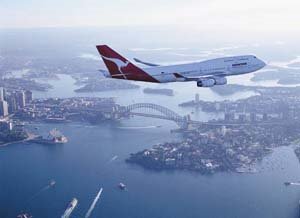
Qantas gripesheets

Yahoo, Good News! (Susan Ohanian Speaks Out): "Quantas Gripesheets


While this undoubtedly has only tenuous links to news articles that would be suitable for discussion, I thought it was interesting to read and worth including here.

It's always Good News to get a laugh.
Teachers would do well to craft answers in the same vein as that of the mechanics' comments here.

Quantas Gripesheets

Note: Remember it takes a college degree to fly a plane, but only a high school diploma to fix one.

After every flight, Qantas pilots fill out a form, called a "gripesheet," which tells mechanics about problems with the aircraft. The mechanics correct the problems document their repairs on the form, and then pilots review the gripe sheets before the next flight.

Here are some actual maintenance
complaints submitted by Qantas' pilots (marked with a P) and the solutions recorded (marked with an S) by maintenance engineers.

By the way, Qantas is the only major airline that has never, ever, had an accident.


P: Left inside main tire almost needs replacement.
S: Almost replaced left inside main tire.


P: Test flight OK, except auto-land very rough.
S: Auto-land not installed on this aircraft.


P: Something loose in cockpit.
S: Something tightened in cockpit.


P: Dead bugs on windshield.
S: Live bugs on back-order.


P: Autopilot in altitude-hold mode produces a 200 feet per minute descent.
S: Cannot reproduce problem on ground.


P: Evidence of leak on right main landing gear.
S: Evidence removed.


P: DME volume unbelievably loud.
S: DME volume set to more believable level.


P: Friction locks cause throttle levers to stick.
S: That's what friction locks are for.


P: IFF inoperative in OFF mode.
S: IFF always inoperative in OFF mode.


P: Suspected crack in windshield.
S: Suspect you're right.


P: Number 3 engine missing.
S: Engine found on right wing after brief search.


P: Aircraft handles funny.
S: Aircraft warned to: straighten up, fly right, and be serious.


P: Target radar hums.
S: Reprogram med target radar with lyrics.


P: Mouse in cockpit.
S: Cat installed.


P: Noise coming from under instrument panel. Sounds like a midget pounding on something with a hammer.
S: Took hammer away from midget

--

Thursday, July 06, 2006

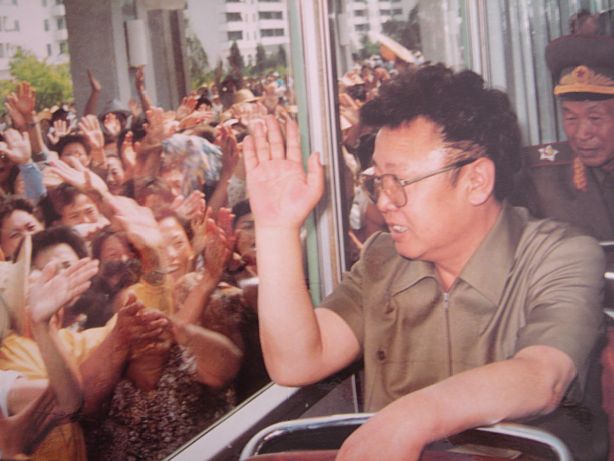
North Korea's Kim Jong Il

North Korea's Kim Jong Il

NEWSMAKER-North Korea's Kim: cagey, defiant and operatic


By Jon Herskovitz

SEOUL, July 5 (Reuters) - North Korea's Kim Jong-il has vexed regional neighbours for years with his pursuit of nuclear weapons and long-range missiles that may one day deliver them.

Known to his subjects simply as "Dear Leader", Kim, 64, is commander of the 1.2-million-man armed forces, the main advocate of a policy that gives the military a huge say in running the reclusive, impoverished state and, according to official media, an awe-inspiring master of military strategy.

Long groomed by his father, state founder Kim Il-sung, he gradually tightened his hold on power after the elder Kim died in 1994.

He declined to assume the title of president, instead designating his father "eternal president" and opting to rule as chairman of the National Defence Commission.

Some foreign North Korea watchers doubted whether he could stay on top for long given the power of the country's generals, but he has proved them wrong.

"His relation with the military is very strong because he has been focused on it since the start," said Michael Breen, author of "Kim Jong-il: North Korea's Dear Leader".

Breen said Kim has had to balance the interests of the military with those of advocates of a softer line, using diplomacy to wrest rewards in exchange for decreasing the country's military threat.

"This may have been a gesture to the hardliners," Breen said of Wednesday's tests of at least six missiles, which ratcheted up regional tensions and drew international condemnation.


DEAR LEADER, GREAT GOLFER

Kim has been playing a cagey, defiant and sometimes deadly game with the international community for years.

He burst onto the world stage in 2000, hosting an unprecedented summit with then South Korean president Kim Dae-Jung. Landmark meetings followed with U.S. Secretary of State Madeleine Albright and Russian President Vladimir Putin, but the ray of sunshine out of the North soon came to an end.

In 2002, tensions rose on the peninsula after Washington said Pyongyang had admitted to pursuing a nuclear arms programme in violation of a 1994 agreement designed to freeze its atomic ambitions.

China then arranged and hosted talks aimed at resolving the crisis, having a reluctant North Korea sit down alongside South Korea, the United States, Japan and Russia. The talks have been stalled since November 2005.

According to North Korean propaganda, Kim is one of the greatest leaders in history.

After all, this is a man who pilots jet fighters -- even though he always travels by land for his infrequent trips abroad.

He has penned operas, produced movies and accomplished a feat unmatched in the annals of professional golf, shooting 11 holes-in-one on the first round he ever played.

This is also a man who intelligence experts say ordered the 1983 bombing in Myanmar that killed 17 senior South Korean officials and the destruction of a Korean Air jetliner in 1987 that killed 115.

In the cult of personality in North Korea, Kim, a short, tubby man with a pompadour and platform shoes, is king.

His legion of critics outside North Korea note that he spent great amounts on gigantic monuments and elaborate spectacles glorifying himself and his late father while, according to experts, at least 1 million North Koreans out of a population of 23 million starved to death in the mid-1990s.